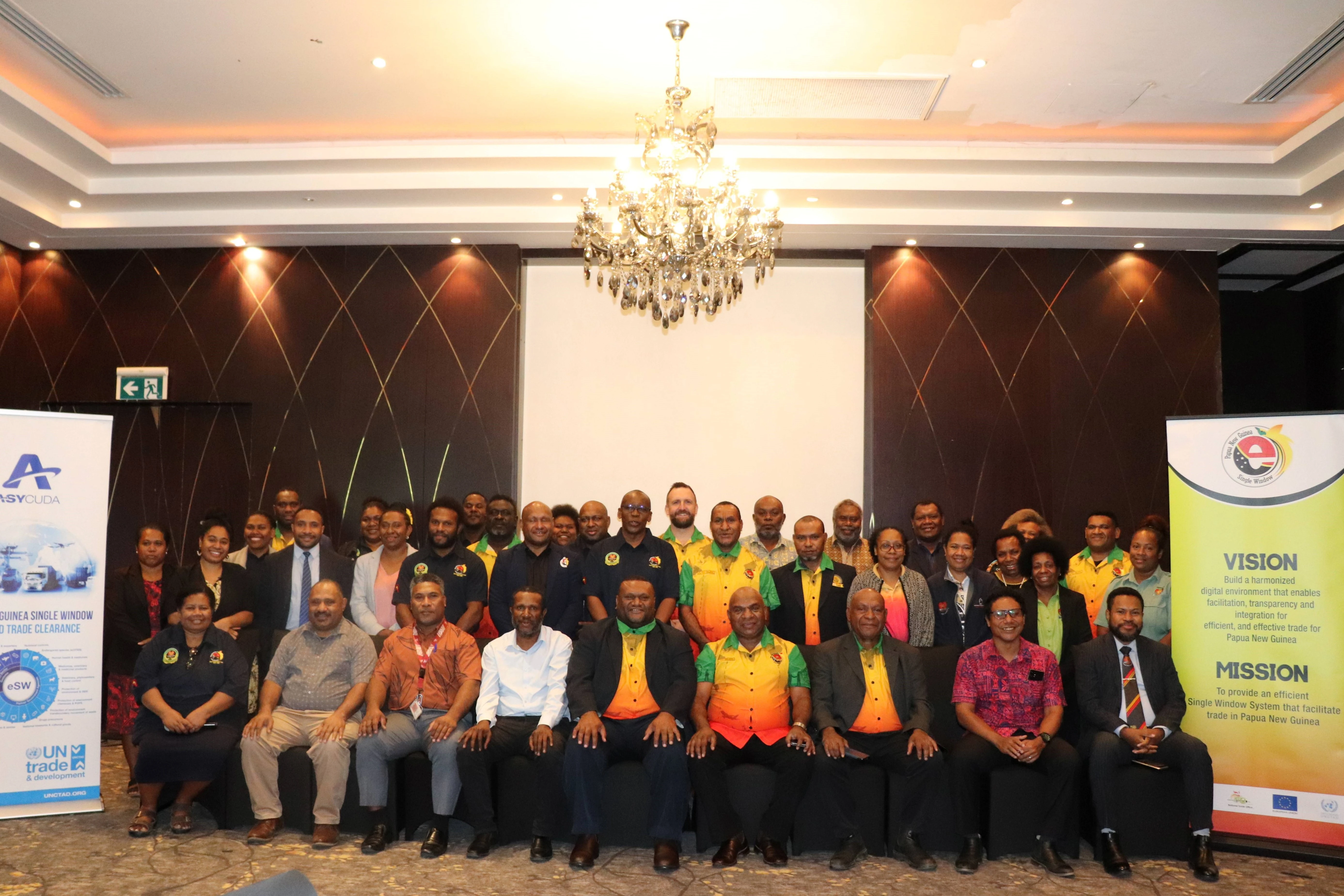
Port Moresby, Papua New Guinea – The National Trade Facilitation Committee (NTFC) has successfully completed Phase Two of Papua New Guinea's Single Window Project, marking another significant step towards transforming the country's trade and border management systems.
The milestone was officially recognized during a ceremony recently, where representatives from participating Government agencies formally signed off on their respective data reconciliation and validation processes.
Phase Two focused on data harmonization, a critical component of the Single Window initiative. Through extensive collaboration among agencies, more than 3,000 trade data elements were reviewed, streamlined, and consolidated into approximately 900 WCO standardized data elements. The exercise eliminated duplicate and redundant information, ensuring that all agencies can operate using a common language and standardized data framework.
The project engaged 17 government agencies and involved 32 technical officers working collectively to align trade-related data with international standards, including the World Customs Organization (WCO) Data Model.
NTFC Chairman and Chief Commissioner of Customs, David Towe commended the participants for their commitment and dedication throughout the process.
"We are working on a project that is going to transform the way we do business in Papua New Guinea," Mr. Towe said.
"This will change the way trade is conducted by improving efficiency, reducing costs, creating investment opportunities, and supporting the growth of the SME sector."
Mr. Towe highlighted the importance of collaboration, noting that the success of the Single Window Project depends on the collective efforts of all participating agencies.
He also acknowledged the significant contribution of agency representatives, technical working groups, and the PNG Customs team for coordinating efforts across government agencies to deliver the phase successfully.
The completion of Phase Two means that participating agencies have now validated and certified that their data requirements have been harmonized against internationally recognized standards. The project will now move into the next stage focusing on systems design, integration, and implementation.
UNCTAD Consultant to Single Window, Mr. Geoffrey Kossami said the harmonization exercise will significantly simplify trade processes for both government agencies and businesses.
"The number of forms and fields that traders are required to complete has been reduced by 73 percent," he said.
"This means traders will only need to submit information once, and that same data can be shared and understood across agencies. The process becomes seamless because systems can communicate with each other using the same language."
He explained that under the current environment, agencies maintain separate datasets and reporting requirements, creating duplication and inefficiencies.
"Today, we are creating a common language that all agencies understand. Whether the data is submitted to NAQIA, CEPA, NISIT, Customs, or another agency in the supply chain, the same information can move across systems without requiring repeated submissions."
Mr. Kossami said the streamlined approach will reduce compliance costs, improve efficiency, and make trade processes easier for importers, exporters, and other stakeholders.
Representing the Department of International Trade and Investment, Deputy Secretary Philip Mercado said the completion of Phase Two represents a significant national achievement.
"Over the course of this phase, significant progress has been made in reviewing and analyzing data requirements across participating government agencies," the Deputy Secretary said.
"Through this collaborative effort, we have improved our understanding of how information is collected, shared, and processed throughout the trade and regulatory environment."
The Deputy Secretary added that the harmonization process has established a strong foundation for standardizing data requirements according to international best practices, including the United Nations Trade Data Element Directory and the WCO Data Model.
Authorized by
David Towe
Chief Commissioner of Customs